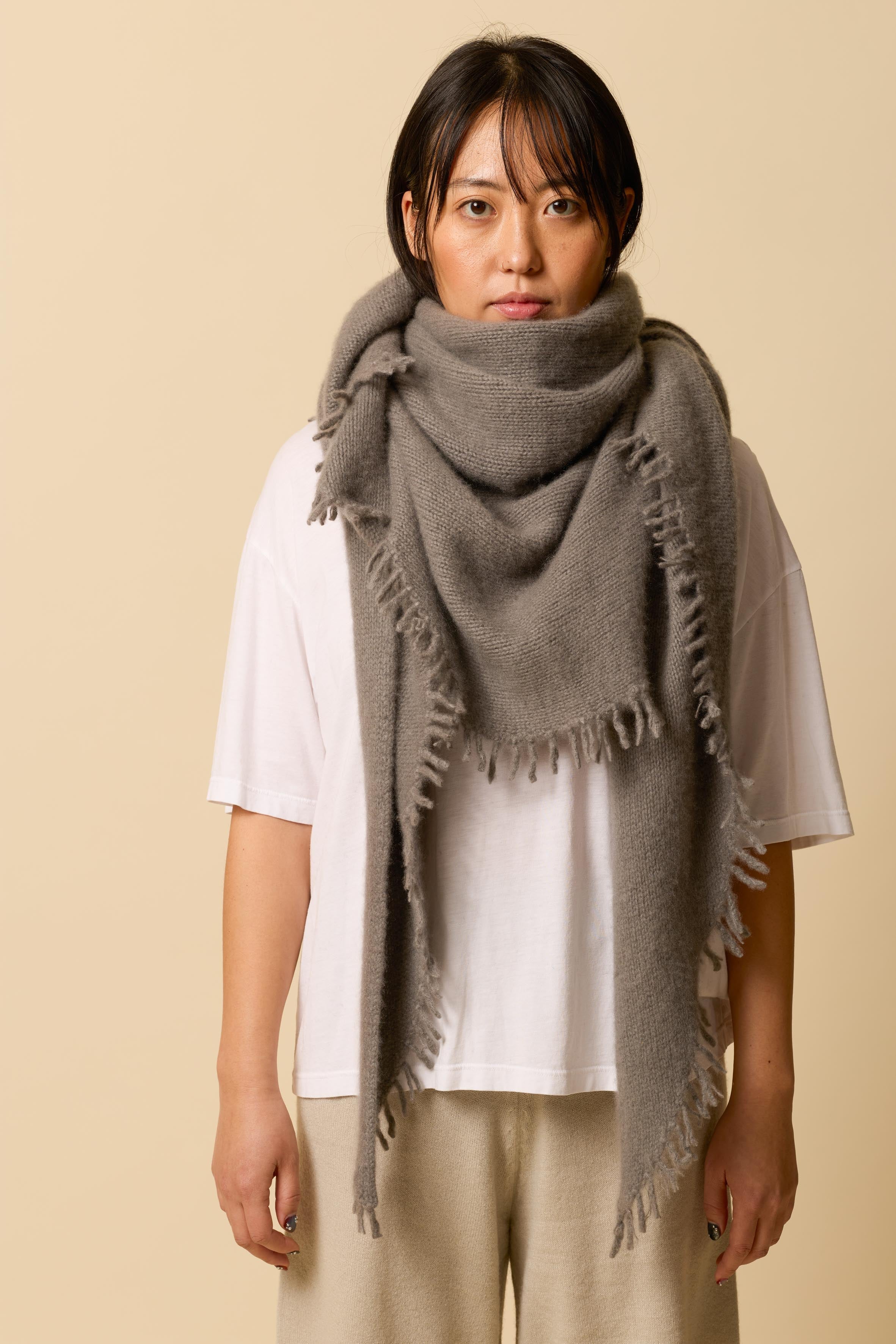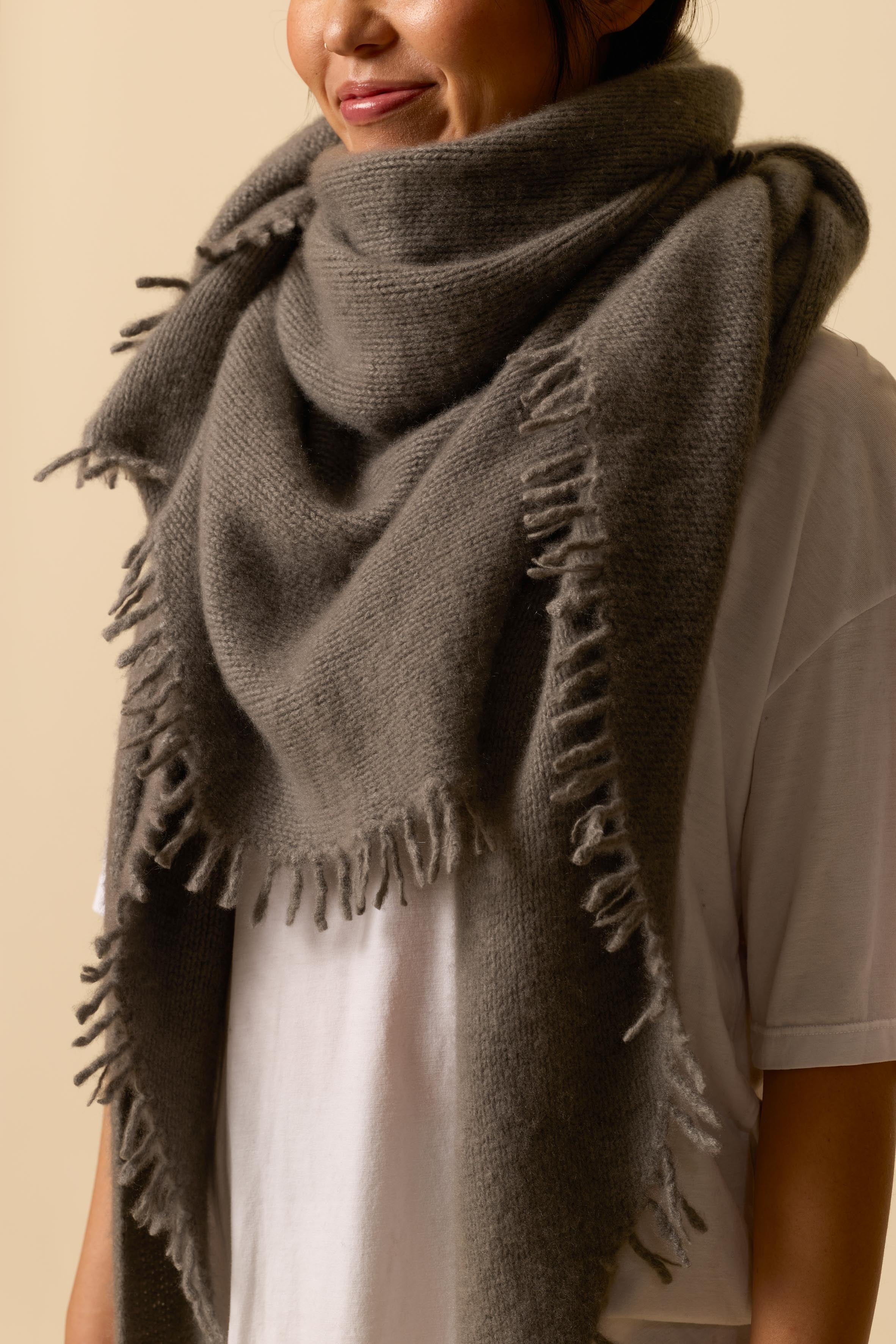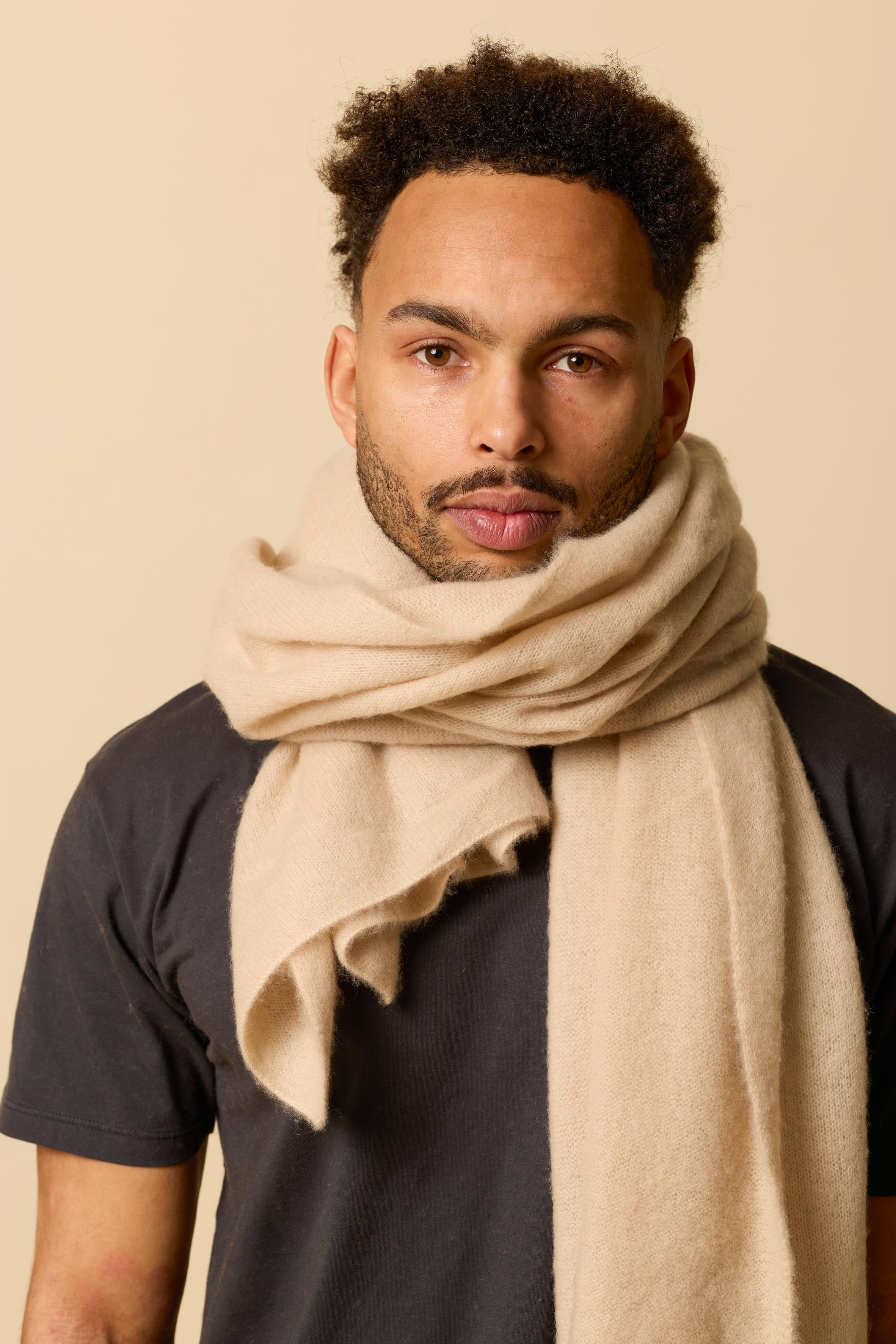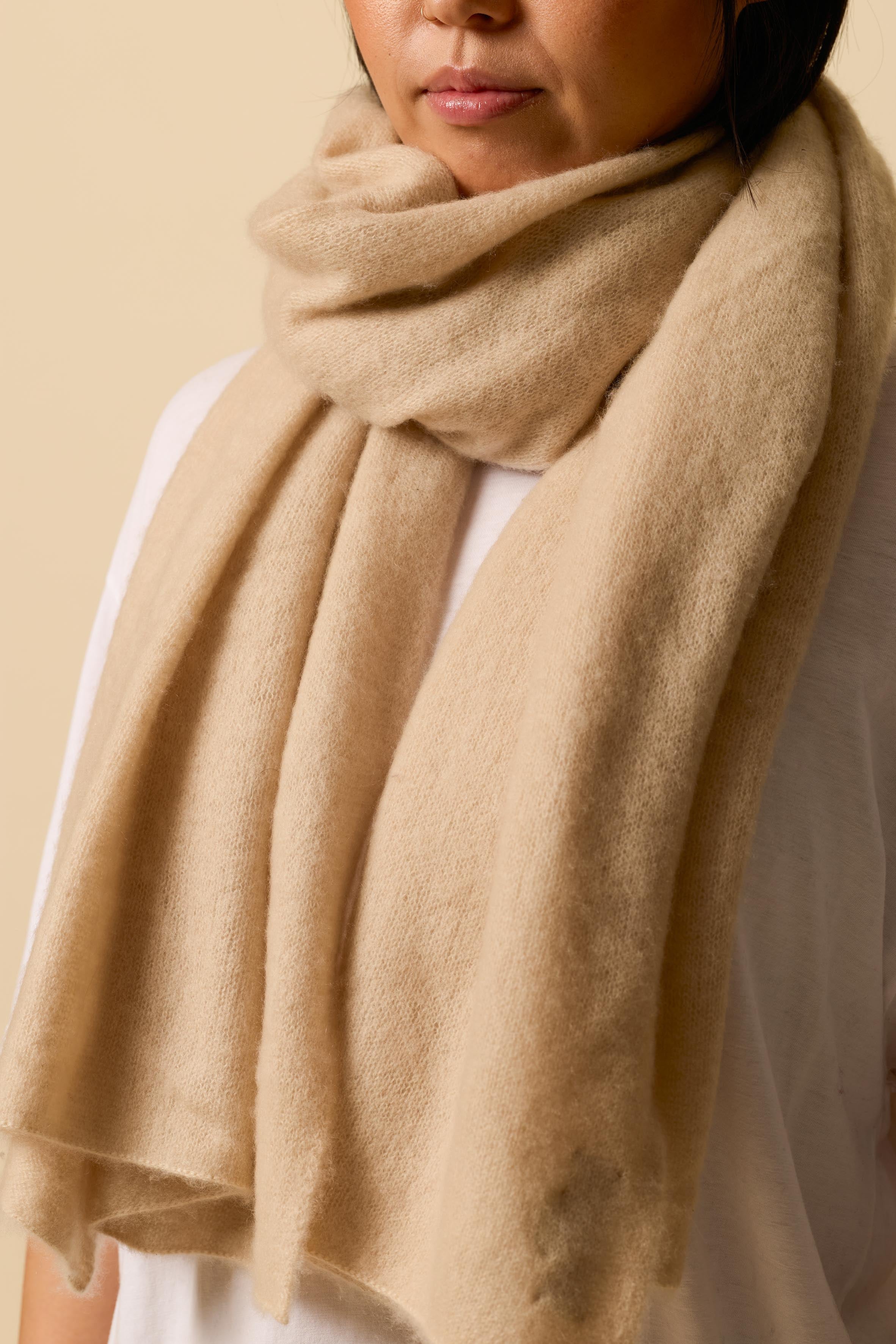
You can spot good cashmere by six concrete signs – not by the price tag alone, and certainly not by marketing words like “extra soft”. In short: look at fibre length and fineness, at the ply, the knit density, the origin of the raw material and the finishing. On top of that come three tests you can run yourself. When those points are right, you are holding real, long-lasting cashmere.
Why any of this matters: cashmere is the fine undercoat of the cashmere goat, combed out once a year in spring. One goat yields only around 150 grams of usable fibre per year. That is precisely why genuine quality has its price – and why it pays to know what you are looking at.
1. Fibre length and fineness: the basis of all quality
The most important quality marker isn't visible at first glance, but you will feel it later. Two figures decide it:
- Fineness (microns): the diameter of the individual fibre. High-grade cashmere sits at roughly 14 to 16.5 microns. The finer the fibre, the softer and lighter the knit – from around 19 microns it becomes noticeably scratchier.
- Fibre length: long fibres (about 34 to 40 mm) can be spun more tightly, shed less and last for years. Short fibres (under 30 mm) slip out of the yarn – the result pills heavily and loses its shape.
Fine, long fibres are the core of quality. They cost more to buy in, but they are the difference between a sweater for one season and one for many years.
2. Ply: why 2-ply usually lasts better
“Ply” describes how many twisted single yarns your thread is made of. 2-ply means two yarns twisted together. That makes the knit more stable, denser and more resilient than a single thread.
A common misconception: more ply does not automatically mean thicker or warmer. A fine 2-ply summer sweater can be lighter than a coarse 1-ply one. It is about construction, not sheer thickness. For sweaters and cardigans you wear often, 2-ply is a safe choice.
3. Weight and density: the heft tells the truth
Take the piece in both hands. High-grade cashmere feels substantial, not paper-thin. The weight per area reveals how much fibre was actually knitted in. Two simple checks:
- Hold the knit up to the light. If a lot shines through, material was saved.
- Squeeze it briefly. A densely knitted piece springs back and feels warm and full.
Thin, loose goods are cheaper to produce – and that is exactly where a lot of supposed bargains hide.
4. Origin of the raw material: where the best fibre grows
Not all cashmere is equal. The finest fibre comes from the coldest regions: Mongolia and Inner Mongolia. Temperatures there drop far below zero in winter – the goats grow a particularly fine, dense undercoat to protect themselves. That undercoat is what yields the softest cashmere.
So ask about the origin of the raw material, not only about where it was knitted or sewn. At WARM ME the two are deliberately separate: we work with 100 % Mongolian cashmere, handcrafted in Kathmandu, Nepal, on traditional hand-knitting machines. Read exactly how that works in our handmade story.
5. Finishing and twist: the difference is in the detail
Even the best fibres only make a good piece with clean finishing. Look for:
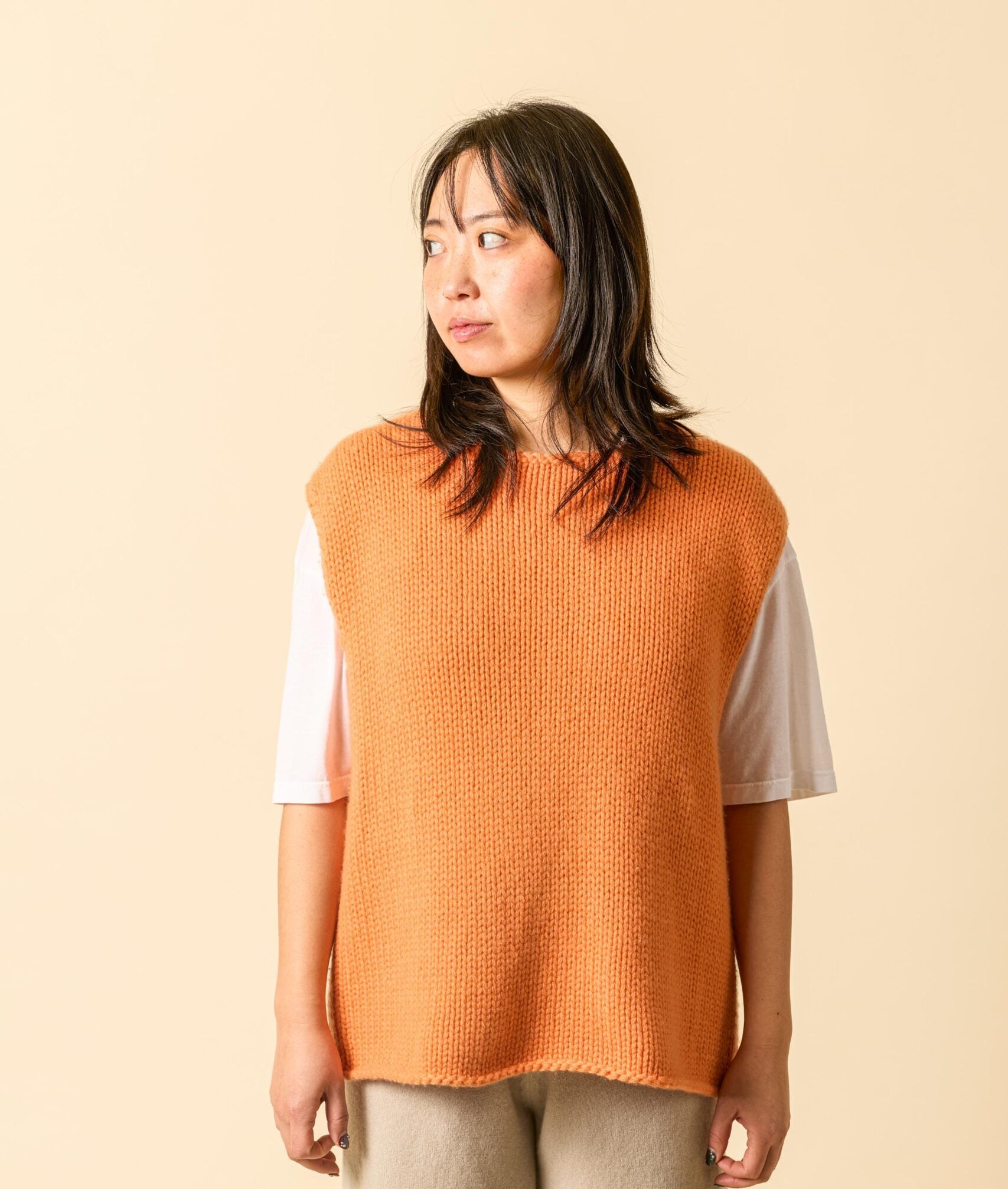
- An even stitch pattern with no thin spots, holes or knots.
- Clean seams and firm ribbing that hold their shape.
- Tightly twisted yarn: untwist the thread at the cuff a little. If it sits firm and evenly twisted, the work was done properly.
Handwork shows itself in the detail here – in the transitions, the ribbing and the regularity of the knit.
6. An honest price, and three tests you can run yourself
Real cashmere made from long, fine fibres cannot be extremely cheap. A sweater at 40 euros labelled “100 % cashmere” is almost always made from short, low-grade or recycled fibres – or has been bulked out. An honest price reflects the raw material and the work. Before you buy, run these three tests:
The handle test
Good cashmere feels dry-soft and warm, not slippery or waxy. An almost soapy over-softness is a warning sign: cheap goods are often treated with softeners and silicones to disguise short fibres. That softness disappears after the first wash.
The stretch test
Pull the knit apart carefully and let go. High-grade cashmere springs back into shape. If the piece stays stretched, the fibres are too short or too loosely worked.
The pilling test
Rub the palm of your hand across the surface for a few seconds. All cashmere pills a little at first – loose short fibres work their way out. But if many firm bobbles appear immediately, short fibres dominate. Good goods settle after the first few wears; cheap ones pill for good.
Rule of thumb: fine, long fibres, 2-ply twist, densely knitted and of Mongolian origin – that is how you recognise high-grade cashmere that will stay with you for many years.
Check these six signs and you buy consciously rather than expensively. Cashmere should keep you warm for a long time – not just for one season. Take your time with our sweaters and cardigans, or browse the whole WARM ME shop. And if you want to know something about quality: just ask us – we answer honestly, not with sales talk.